XSS - Merry XSSMas
Day 11
Learn about types of XSS vulnerabilities and how to prevent them.
Leave the Cookies, Take the Payload
Overview
Room URL: https://tryhackme.com/room/xss-aoc2025-c5j8b1m4t6
Difficulty: Easy
Category: Cross-Site-Scripting
Date Completed: 12/11/2025
Objectives
- Understand how XSS word
- Learn to prevents XSS attacks
Table of Contents
Introduction
Walk Through
Lessons Learned
Resources
Introduction
The TBFC messaging portal has been flagged for potential security vulnerabilities, and your mission is to identify and exploit two critical Cross-Site Scripting (XSS) attack vectors. As part of the defensive security team, understanding how attackers abuse unvalidated user input is essential to hardening web applications against injection attacks. In this challenge, you'll navigate a vulnerable web application and demonstrate both Reflected XSS and Stored XSS attacks—two of the most dangerous web application vulnerabilities. By successfully injecting malicious payloads through the search functionality and messaging system, you'll uncover how poor input validation can allow attackers to execute arbitrary JavaScript in users' browsers, potentially stealing session cookies, hijacking accounts, or spreading malware. This hands-on exercise reinforces the critical importance of input sanitization and output encoding in secure application design.
Walk Through
- Start the target machine
- Go to the web interface of the target machine
- Which type of XSS attack requires payloads to be persisted on the backend?
- stored
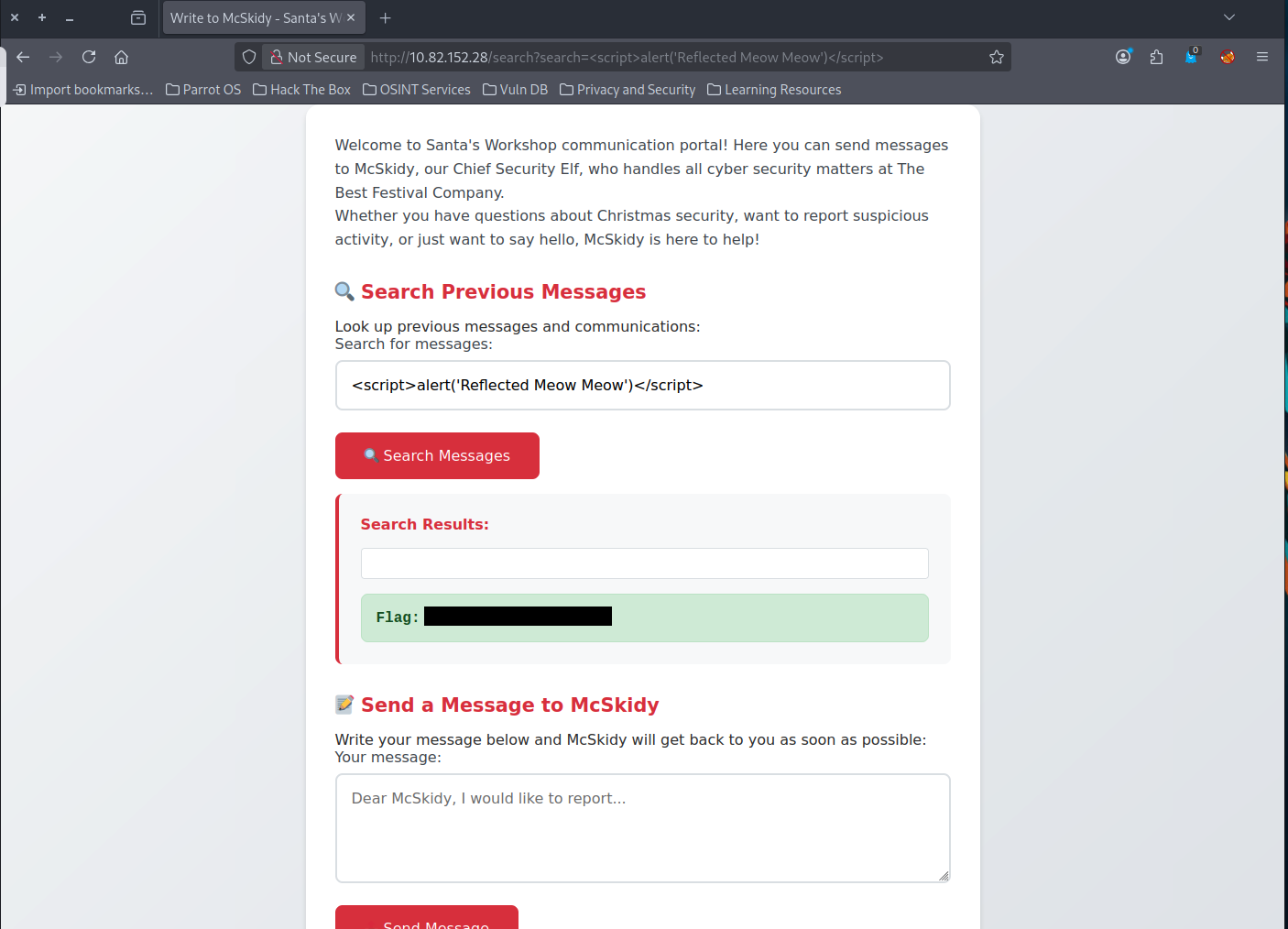
- What's the reflected XSS flag?
- Search messages sends a request. Using the request form can add to test a reflected xss.

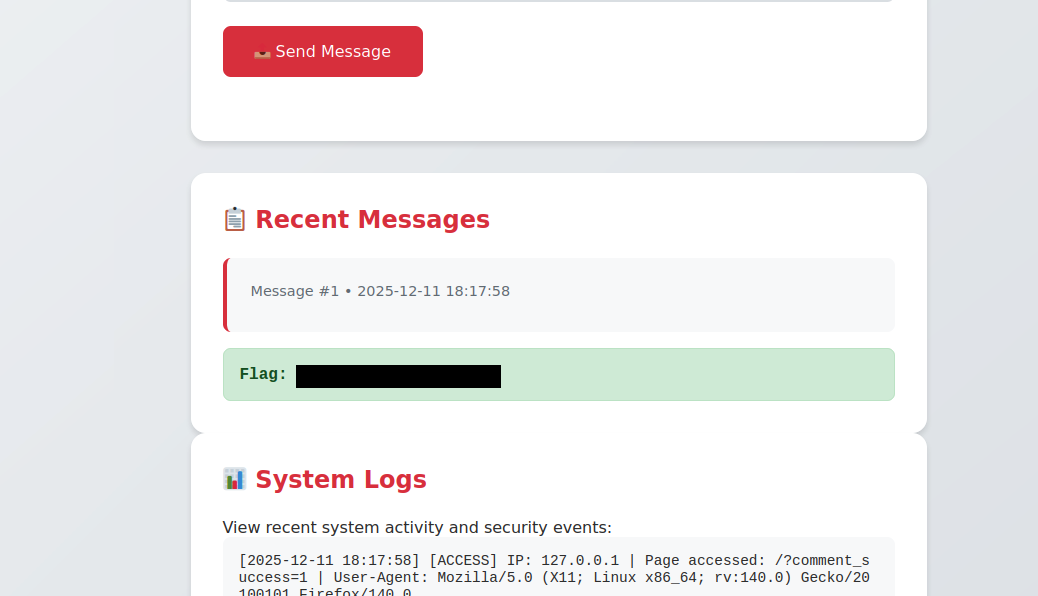
- What's the stored XSS flag?
- The send a message field stores the input in the database. By using you can see if it is susceptible to a stored attack.

Lessons Learned
- Input Validation is Non-Negotiable: Both vulnerabilities stem from the application's failure to validate, encode, or sanitize user input. The difference between Reflected and Stored XSS lies in persistence—Reflected XSS targets individual victims through phishing links, while Stored XSS compromises all users who access the affected page.
- Defense Strategies Are Essential: Organizations must implement layered defenses including: using
textContentinstead ofinnerHTML, settingHttpOnlyandSameSitecookie attributes to limit JavaScript access, and properly encoding all output to escape potentially dangerous characters before rendering them in the browser. These practices directly prevent the JavaScript injection attacks demonstrated in this challenge.
Resources
TryHackMe
OWASP XSS Prevention Cheat Sheet
PortSwigger Web Security Academy – XSS